How EMOC Training Transformed Care and Saves Lives in Bor Town, Jonglei State
How EMOC Training Transformed Care and Saves Lives in Bor Town, Jonglei State
Posted on: 2026-03-24. By Garang Abraham Malak - Communications Consultant, UNICEF South Sudan
How EMOC Training Transformed Care and Saves Lives in Bor Town, Jonglei State
Winny Mawut, a 35-year-old mother of six, experienced firsthand how quickly childbirth can turn into an emergency at Bor State Hospital. After giving birth, she began bleeding heavily while her newborn struggled to breathe.
Both lives depended on how quickly help arrived. Until recently, situations like this often ended in loss, an outcome that reflects the wider reality of maternal and newborn health in South Sudan, where many childbirth complications are preventable but too often go untreated in time.
According to the United Nations Population Fund (UNFPA), South Sudan records one of the highest maternal and newborn mortality rates in the world, with approximately 1,223 maternal deaths per 100,000 live births and a neonatal mortality rate of 40 deaths per 1,000 live births. Behind these figures are emergencies like Winny’s — moments where survival depends on timely care, skilled hands, and functioning equipment.
Such emergencies are not isolated events but part of a broader reality across Jonglei State, where seasonal flooding cuts off roads, distances to health facilities are vast, and shortages of equipment and trained specialists have long delayed lifesaving care. For many families, reaching treatment is only the first challenge; receiving it in time has often been the greater one.
Serving a population of more than 1.3 million people, Bor State Hospital functions as the main referral facility for Greater Jonglei and also receives patients from neighboring counties of Lakes State that border Jonglei. For many families, it is the last line of hope when complications arise.
Against these circumstances, Emergency Obstetric and Newborn Care (EMOC) training and targeted investments delivered through the Bridging Emergencies to Resilience in South Sudan Project, funded by the Korea International Cooperation Agency (KIOCA), has helped change what happens in those critical moments.
The project began by addressing urgent gaps in infrastructure and skills, strengthening the hospital’s ability to respond to emergencies. Fifty-seven packages of specialist medical equipment including oxygen concentrators, incubators, patient monitors, and surgical operating sets were installed, supported by solar power to maintain uninterrupted services.
In addition, there was the establishment of an eight-bed maternity and neonatal unit that now manages about 60 admissions monthly, using three oxygen concentrators and two electrocardiographs to stabilize patients who previously would have faced delayed or limited care.
At the same time, 18 health workers received training in Basic Emergency Obstetrics and Newborn Care. Two senior specialists (Dr. David Tor, Obstetrician/Gynecologist, and Dr. Hakim Koma, General Surgeon) were deployed for on-the-job mentorship, reinforcing skills through daily clinical practice. Drawing from months of bedside mentoring and practical instruction, obstetrician and gynecologist Dr. David Tor Bair says the difference is visible in both confidence and outcomes.
“I am happy to see a lot of impact in terms of newborn care, newborn resuscitation, and essential newborn practices. This has improved newborn survival. Compared to before the training, fewer babies are being sent to the neonatal ICU, and mothers’ wellbeing has improved. The number of mothers requiring blood transfusions has also reduced.”
He cites the greatest measure of success that comes from the work continuing beyond the training room.
“As a trainer, I feel happy when trainees share testimonies of how they are saving lives. Recently, a trainee called to say they managed a preterm newborn and successfully resuscitated the baby. Knowing that these skills will remain even after I leave gives me peace of mind.”
For midwife Mary Akeer, the training reshaped how she reads danger signs and acts under pressure. With six years of clinical experience, five years as a nurse and one in midwifery, she now moves more quickly and confidently when complications arise.
“During the training, I learned Basic Emergency Obstetrics and Newborn Care. It has changed how I respond to emergencies. A woman recently came with severe postpartum hemorrhage. I quickly recognized the danger and called senior doctors immediately. She received timely care.”
She reveals that the shift is visible across the ward, not only in individual cases but in overall outcomes, “From my observation, the training has helped reduce deaths related to postpartum hemorrhage, prolonged labor, and complications because we identify and report cases early”.
In the pediatric ward, Dr. Samuel Majok describes how practical skills and functioning equipment are working together to change survival rates for newborns.
“The EMOC training changed the way we work. Before, we recorded about five newborn deaths per month. Now it has reduced to around one”, citing that improved equipment and a dedicated space for newborn care have made treatment more effective and organized.
“With the new unit and machines like oxygen concentrators, we can manage newborns effectively. We admit about two children daily, around 30 per month. Previously, managing newborns alongside their mothers in maternity was very challenging.
For mothers, the changes are measured not in statistics but in survival and recovery. Winny Mawut, a 35-year-old mother of six, experienced firsthand how trained staff respond when complications arise.
“When I came for delivery, I was welcomed and gave birth safely. Hours later I started bleeding and my baby started having breathing complications, but the trained medical staff attended to me and the baby immediately. I recovered well, and my baby is healthy as I speak and am so happy.”
According to the Jonglei State Ministry of Health, strengthened services have increased public confidence. Admissions at Bor State Hospital rose from 10,653 in 2024 to 12,441 in 2025. The effort complements broader health system investments supported by the World Bank.
Bor State Hospital is one of over 700 health facilities supported since 2024 under the Health Sector Transformation Project (HSTP), generously funded by a consortium of partners including the World Bank, Global Affairs Canada, the Global Fund, Gavi, the Vaccine Alliance, the European Union, and the UK’s Foreign, Commonwealth & Development Office (FCDO).
End….
 Undersecretary Dr. Kennedy Gaaniko Baime Launches National Malaria Prevention Campaign in Yambio
 World Bank Hosts HSTP Orientation in Juba
 Ministry of Health and WHO Sign Agreement for New Juba Headquarters
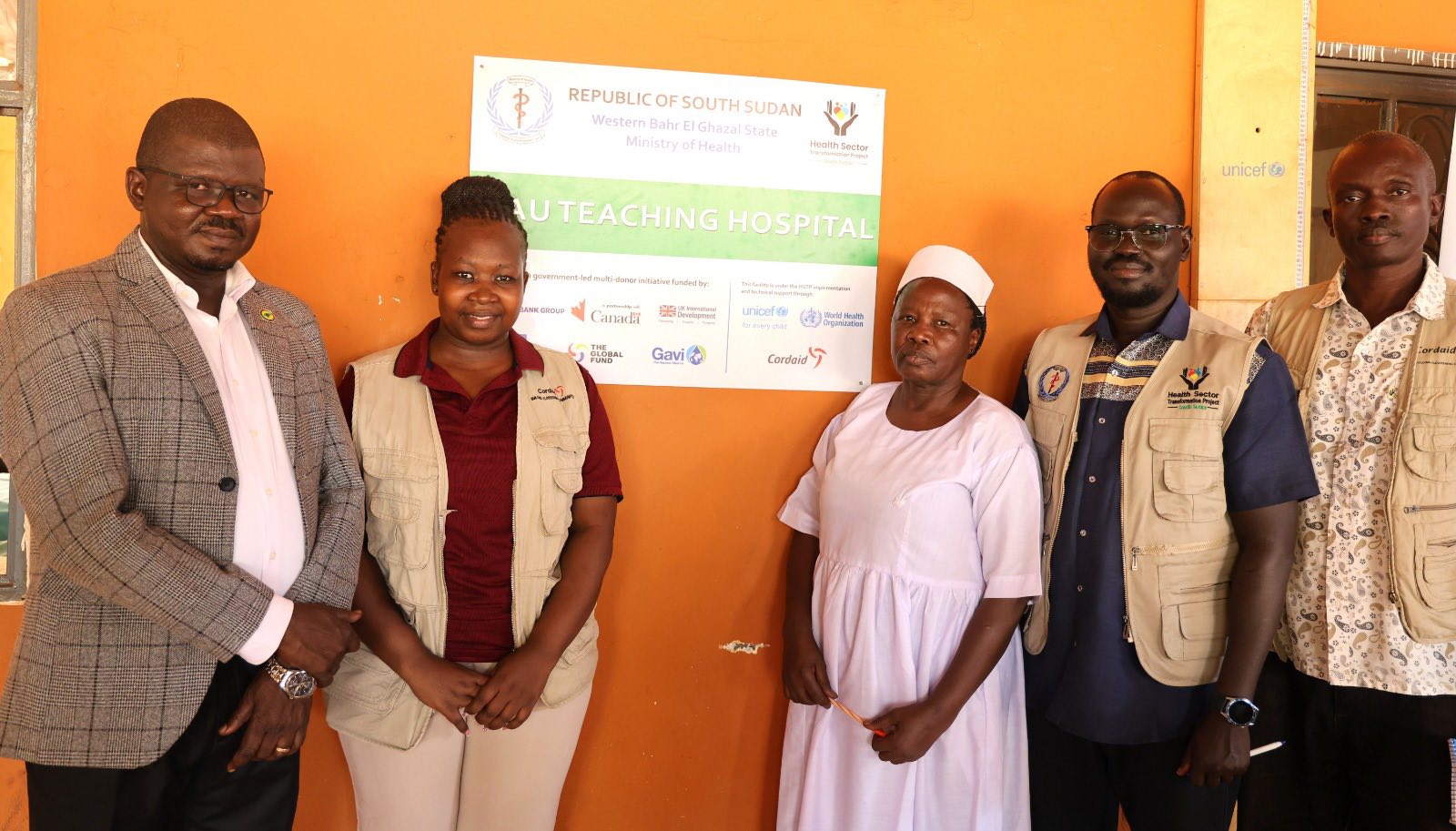 Strengthening Healthcare Delivery and Medical Excellence in Greater Bahr El Ghazal
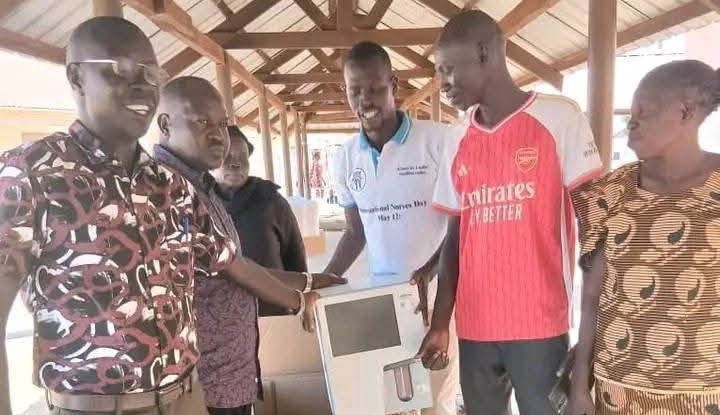 Torit State Hospital Bolsters Diagnostic Capacity with New Laboratory Equipment from UNDP
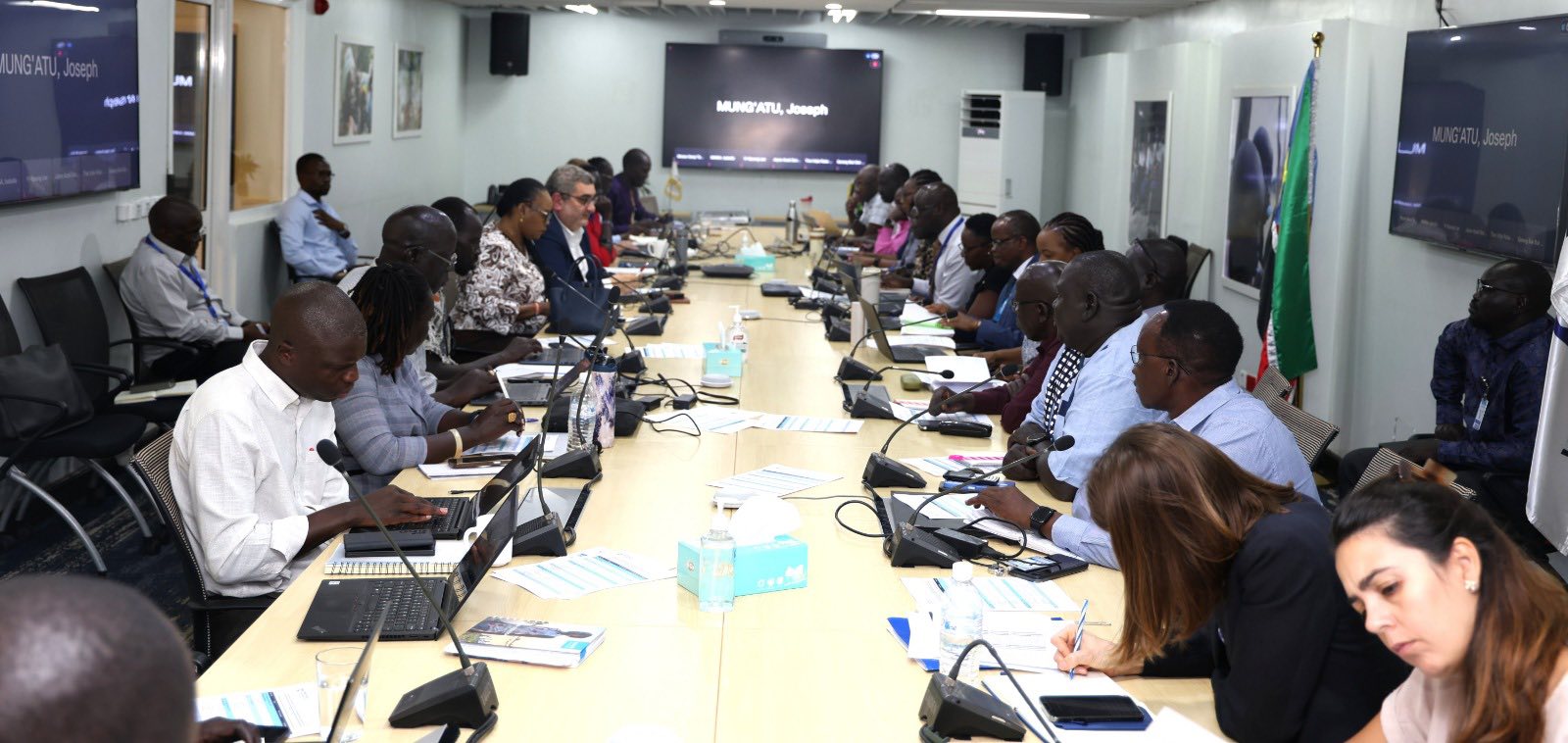 Ministry of Health and World Bank Convene Strategic Mission to Accelerate Health Sector Transformation
The Ministry of Health is an institution of government that works to maintain South Sudanese health by offering efficient medical facilities and humanitarian support.